September 24, 2026
Sages implements the Uniplaner system at Ignatianum University in Krakow
Ignatianum University in Krakow has implemented the Uniplaner system integrated with USOS to streamline class scheduling and improve accessibility.
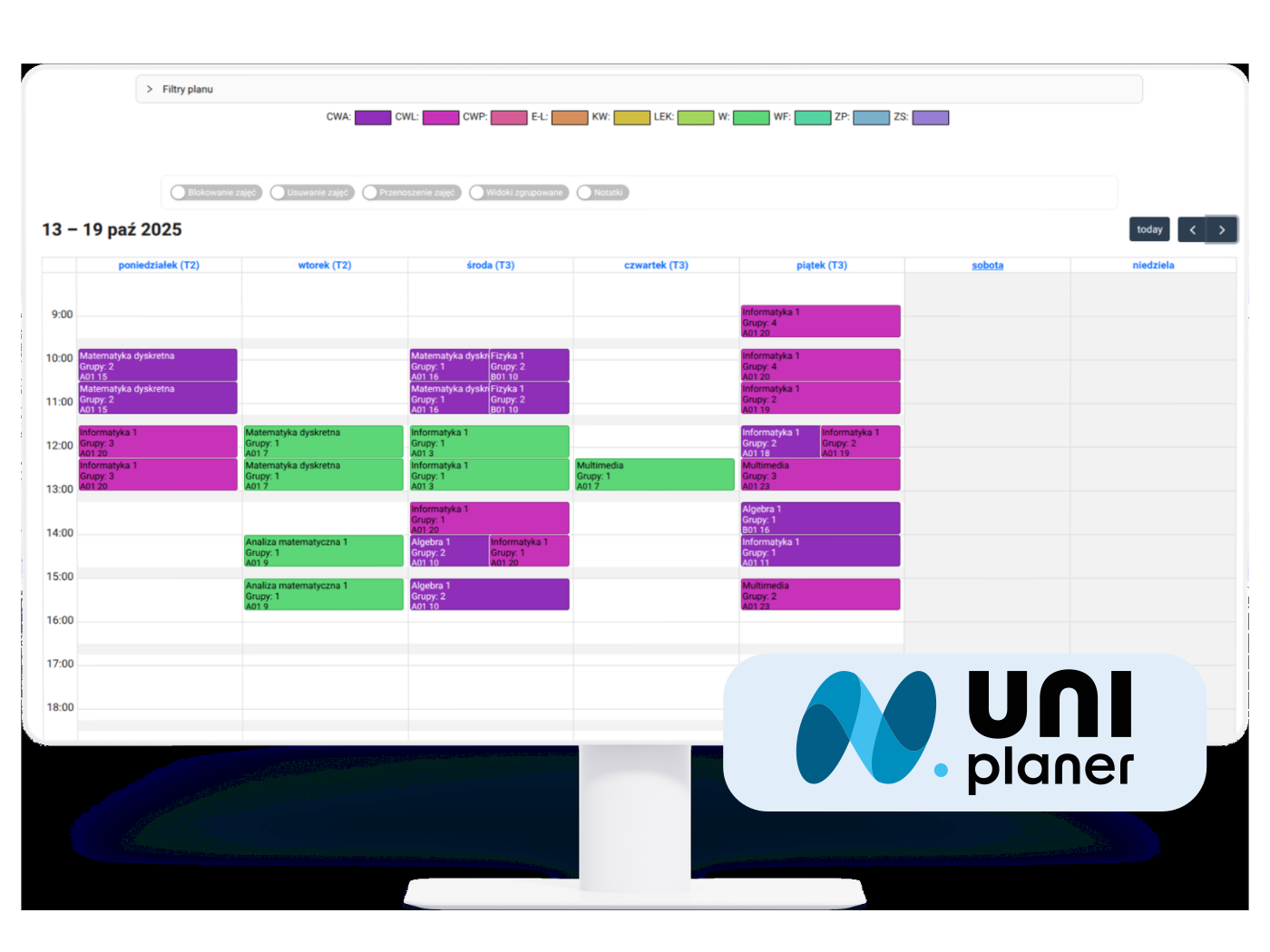
Ensuring an efficiently functioning class schedule is one of the greatest operational challenges for any higher education institution. Bringing together curriculum requirements, the optimal use of infrastructure, and the diverse preferences of lecturers and students requires advanced technological tools. Ignatianum University in Krakow chose to work with Sages, implementing the dedicated Uniplaner system integrated with the central USOS environment.
A new era in class scheduling at Ignatianum University
Until now, the process of preparing schedules at higher education institutions has largely relied on the manual or semi-automated matching of resources. At Ignatianum University, schedules are planned centrally by a team of several schedulers who must take a large number of dependencies and constraints into account. With this way of working, tools that enable better coordination of the whole process, minimise the risk of clashes and allow changes to be introduced more efficiently become essential.
The implementation of Uniplaner by Sages was designed to automate this process.
The project’s main objective was not only to shorten the time needed to create schedules, but also to take digital and architectural accessibility requirements into account (FERS / WCAG standards). The system automatically assigns groups and classes to rooms adapted to the needs of people with disabilities. The solution supports the creation of a more accessible learning environment and makes it possible to organise classes more effectively with people with specific needs, including people with disabilities, in mind. From a broader perspective, implementing Uniplaner is therefore not only a technological change but also another step towards strengthening the university’s accessibility.
As Magdalena Kukuła, Head of the Department of Science and Education at Ignatianum University in Krakow, points out, implementing Uniplaner means a change not only in the scheduling process itself, but also in the approach to the task:
Uniplaner gives us the opportunity to enter a completely different level of class scheduling. It is a tool that allows us to reflect even very complex schedule configurations and take into account a large number of dependencies, constraints and individual conditions that we face in practice when planning classes each semester.
At the same time, the system changes the way we think about scheduling itself. It is becoming less about manually arranging successive classes and more about consciously designing the rules, parameters and conditions within which the system is to find the best possible solution. This means shifting a large part of schedulers’ work to the data preparation and configuration stage, followed by analysis of the system’s results. The scheduler still defines the parameters, rules, constraints and priorities, while the system supports them in analysing a very large number of possible combinations and helps find the solution that best meets the adopted assumptions. This is precisely where Uniplaner’s greatest value lies.
A well-configured system can not only streamline the scheduling process, but above all allow us to create schedules that are better suited to the real needs of the university, students and lecturers. The better we learn to use its capabilities, the greater the benefits we will be able to achieve in the semesters to come.
Key functionalities and implementation benefits
As part of the implementation, Sages delivered a tool supporting the people responsible for preparing class schedules at Ignatianum University. The solution’s key features include:
- Two-way integration with USOS: Uniplaner retrieves curricula, group structures and the room database, then automatically exports the approved, optimised schedule back to USOS while maintaining complete relational consistency.
- Algorithmic optimisation: reliable elimination of scheduling conflicts for rooms, lecturers and students, while minimising gaps between classes and students’ daily workload.
- Consideration of specific needs: automatic assignment of rooms that meet accessibility criteria for people with limited mobility, as well as consideration of travel times between university buildings.
- Quick handling of changes during the semester: flexibility in modifying the schedule during the academic year, for example to make up classes or change teaching staff.
Implementation process
The project carried out by Sages included:
- Pre-implementation analysis and technical design: precise mapping of the university’s rules and defining the boundary conditions for the algorithm.
- Installation and integration: deploying Uniplaner on the university’s infrastructure and integrating it with the USOS student administration system.
- Testing: verifying that the system operates in line with the university’s expectations.
- Training and assistance: training the scheduling team and Ignatianum University’s IT staff in using the system.
- Post-implementation support: providing service support and continuing the software’s development.
Summary
Thanks to Sages’ implementation of the Uniplaner system, Ignatianum University in Krakow has gained a modern digital platform that significantly shortens the time needed to prepare class schedules, eliminates human errors and conflicts, and raises the standards of digital and architectural accessibility for the entire academic community. The combination of modern optimisation algorithms and the USOS system is another step in the university’s digital transformation.
We would like to sincerely thank the authorities and project team of Ignatianum University in Krakow for their trust, professionalism and openness throughout the implementation process. The shared commitment and efficient cooperation of both teams were key to the success of this implementation.