Academic Staff Evaluation Module

The SOP module, part of the broader RIMAP platform, supports every stage of the academic staff evaluation process, from collecting achievement data to analysis, score calculation, reporting, and archiving. Instead of relying on multiple tools and data sources, it brings everything together in one integrated solution.

  • Automation of the evaluation process
  • Integration with university systems
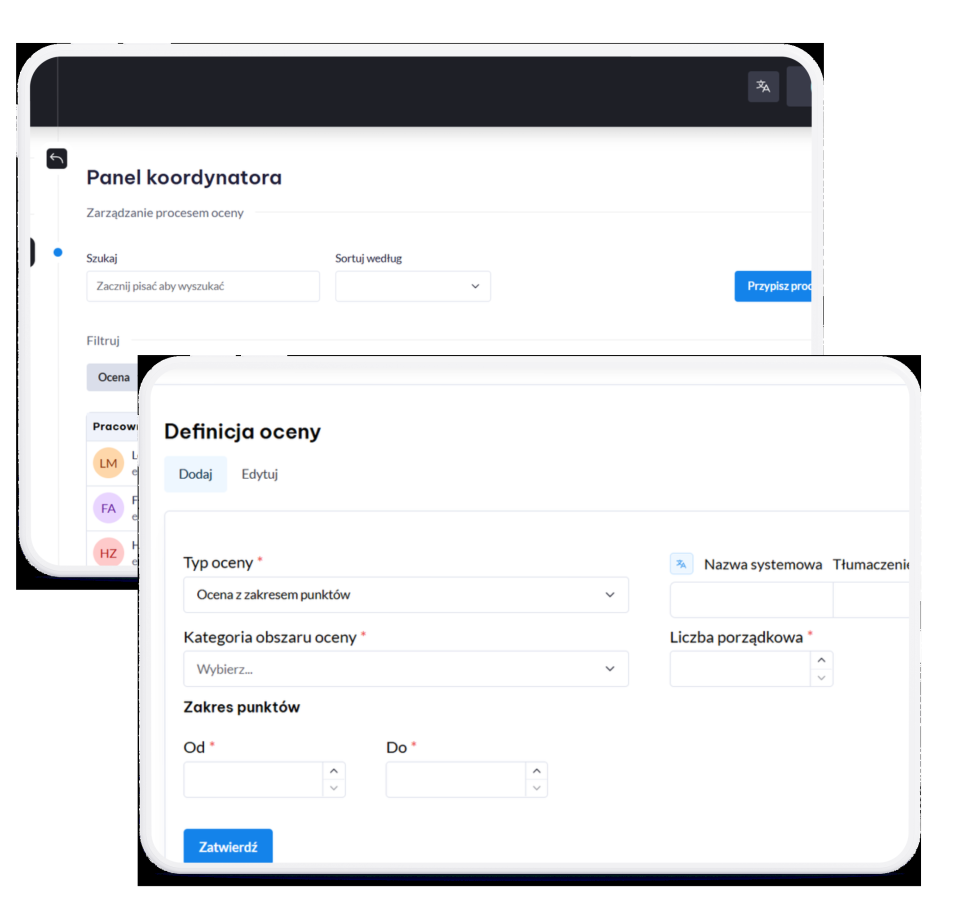
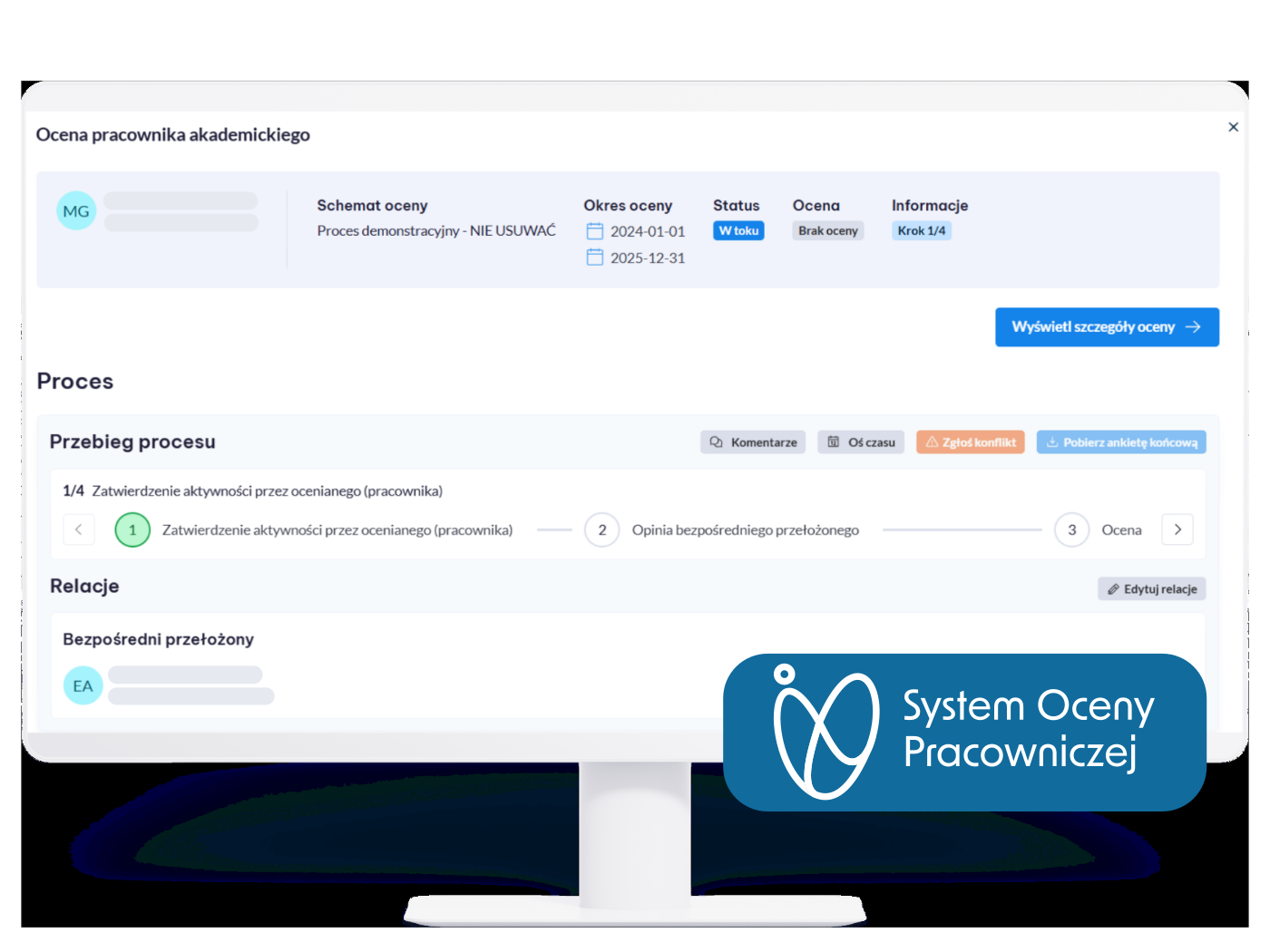
Illustration of the SOP interface for academic staff evaluation

What is the RIMAP System?

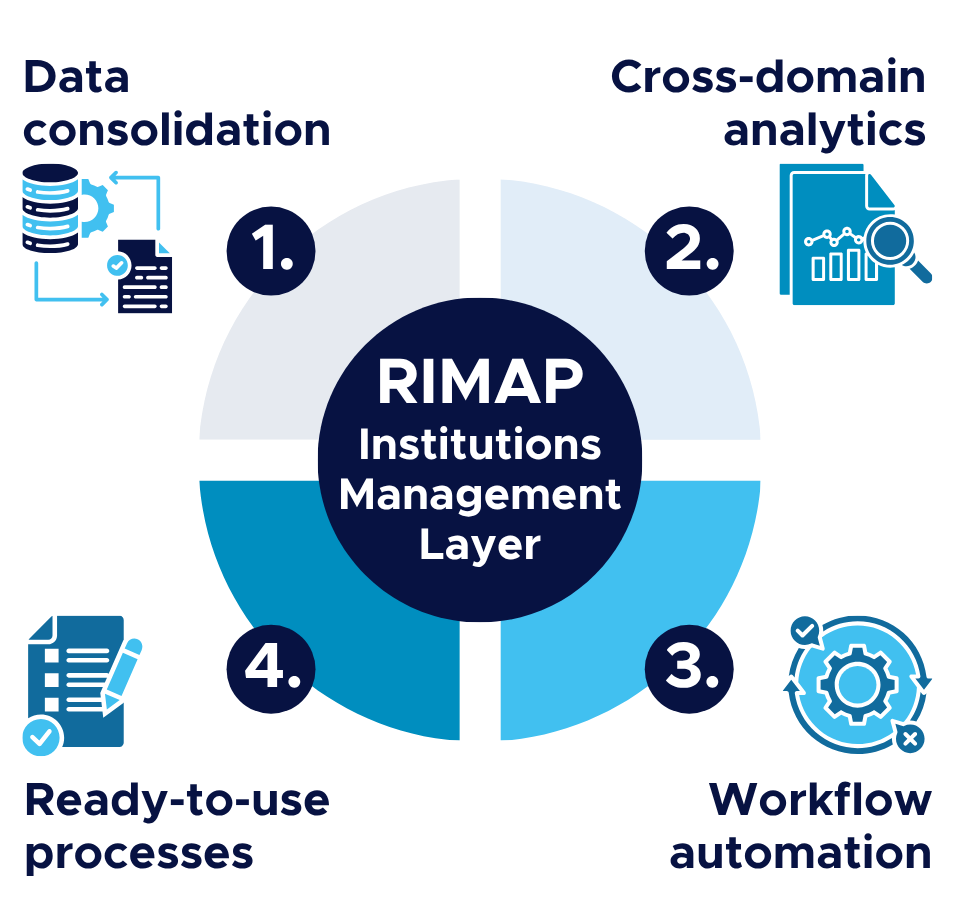
Modern research institutions collect large volumes of data across multiple systems: CRIS/RIMS platforms describe research activity, student information systems cover teaching, and HR systems manage people, roles, and employment. When institutions need to answer cross-cutting questions, such as unit performance, teaching load versus research output, or KPIs across different fields, or run processes that require data from several systems, such as staff evaluation, they often face the same challenge: there is no single platform with access to data stored across all of these environments. RIMAP, the Research Institution Management & Administration Platform, addresses this problem. One of the processes supported by the RIMAP platform is academic staff evaluation through the SOP module.

Diagram showing how the SOP module works

Benefits for universities

SOP enables universities to measure academic output in a consistent and reliable manner with minimal organizational effort.

  1. 01

    Comprehensive and transparent staff evaluation

    SOP automates data collection, calculates results, and helps ensure compliance with regulations, making evaluations reliable and repeatable.

  2. 02

    Less bureaucracy, more automation

    Integrations with university systems eliminate the need for forms and manual data entry—scores and reports are generated automatically.

  3. 03

    Decision support and staff potential analysis

    SOP reports and rankings provide a clear view of staff structure and performance, making it easier to plan promotions, training, and HR policies.

Illustration of SOP benefits for universities

Key features of the SOP module

  • 1

    Defining evaluation frameworks by job category, department, and discipline.

  • 2

    Flexible algorithms and scoring models.

  • 3

    Integration with external systems such as Omega-PSIR, USOS, Moodle, and others.

  • 4

    Automatic aggregation of data on academic, teaching, and administrative achievements.

  • 5

    Achievement submission and approval workflows.

  • 6

    Workflow for evaluation committees and supervisors.

  • 7

    Generating reports and evaluation sheets in PDF or XLSX format.

  • 8

    Automatic generation of rankings and summaries.

  • 9

    Handling of the appeals process and archiving.

  • 10

    Built-in user roles: staff member, committee member, coordinator, manager, administrator, and HR.

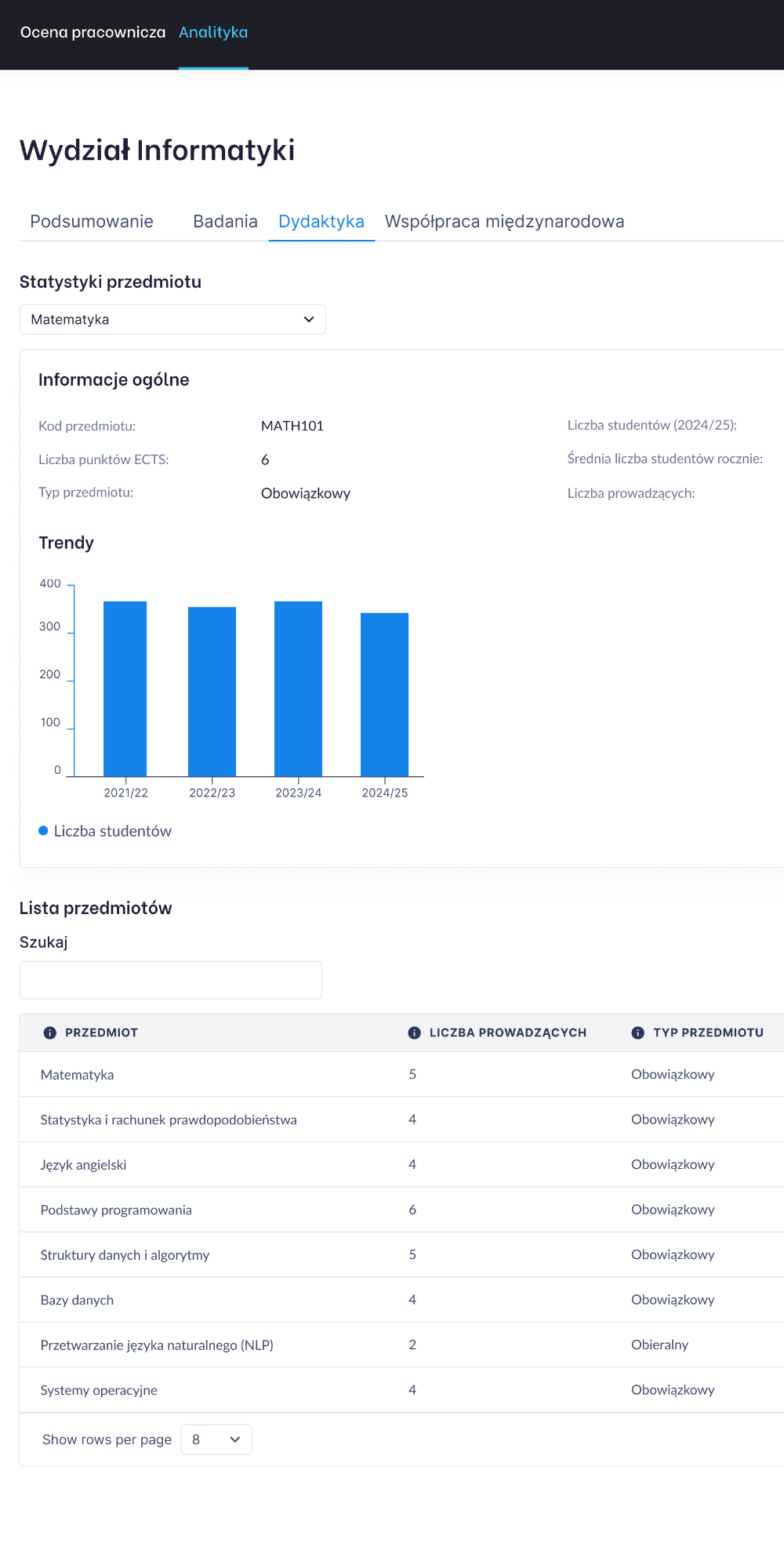
SOP teaching panel with a course list, course statistics, and a chart showing student numbers over time
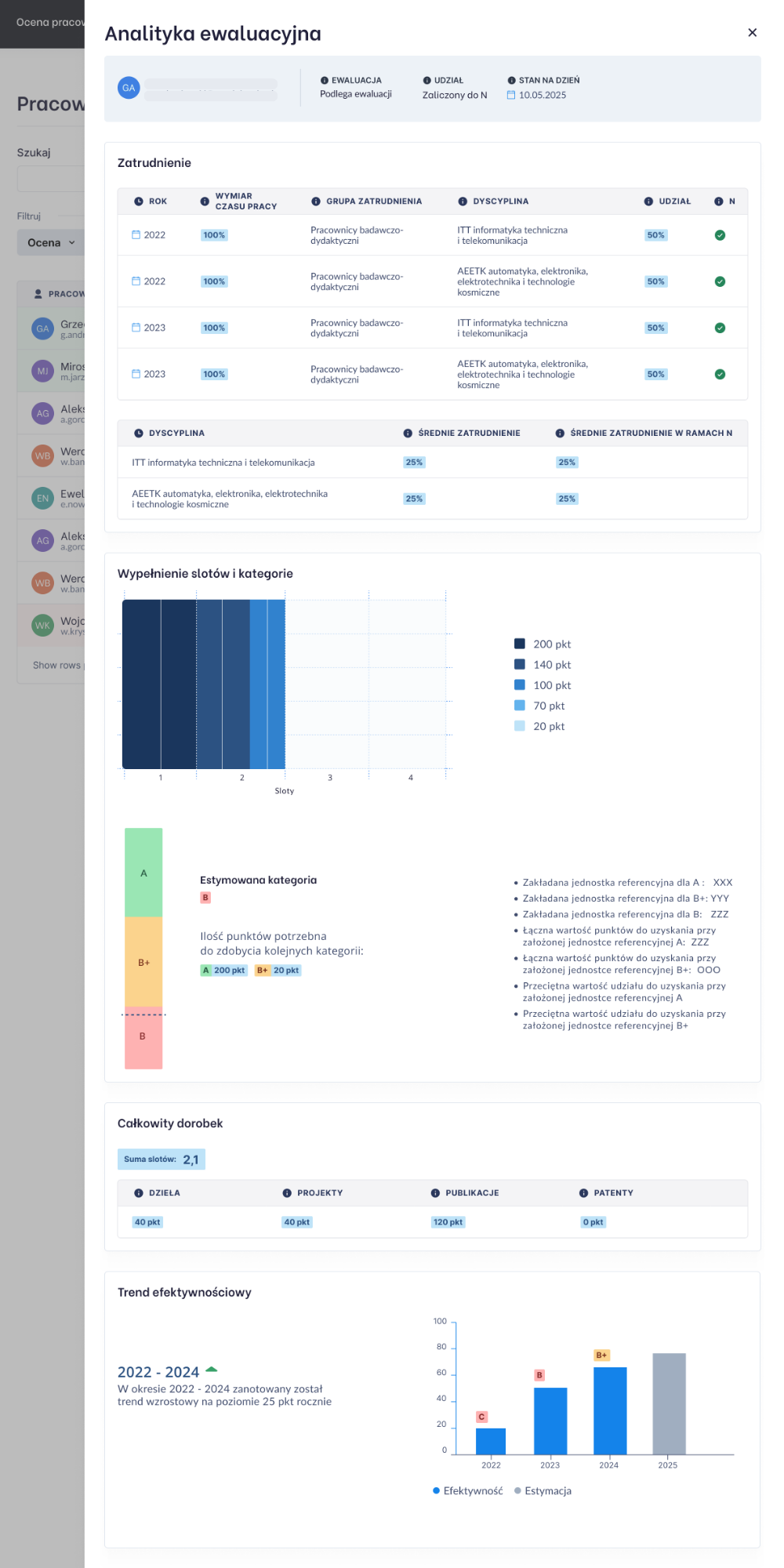
Staff evaluation analytics view with employment data, scores, evaluation category, and performance charts
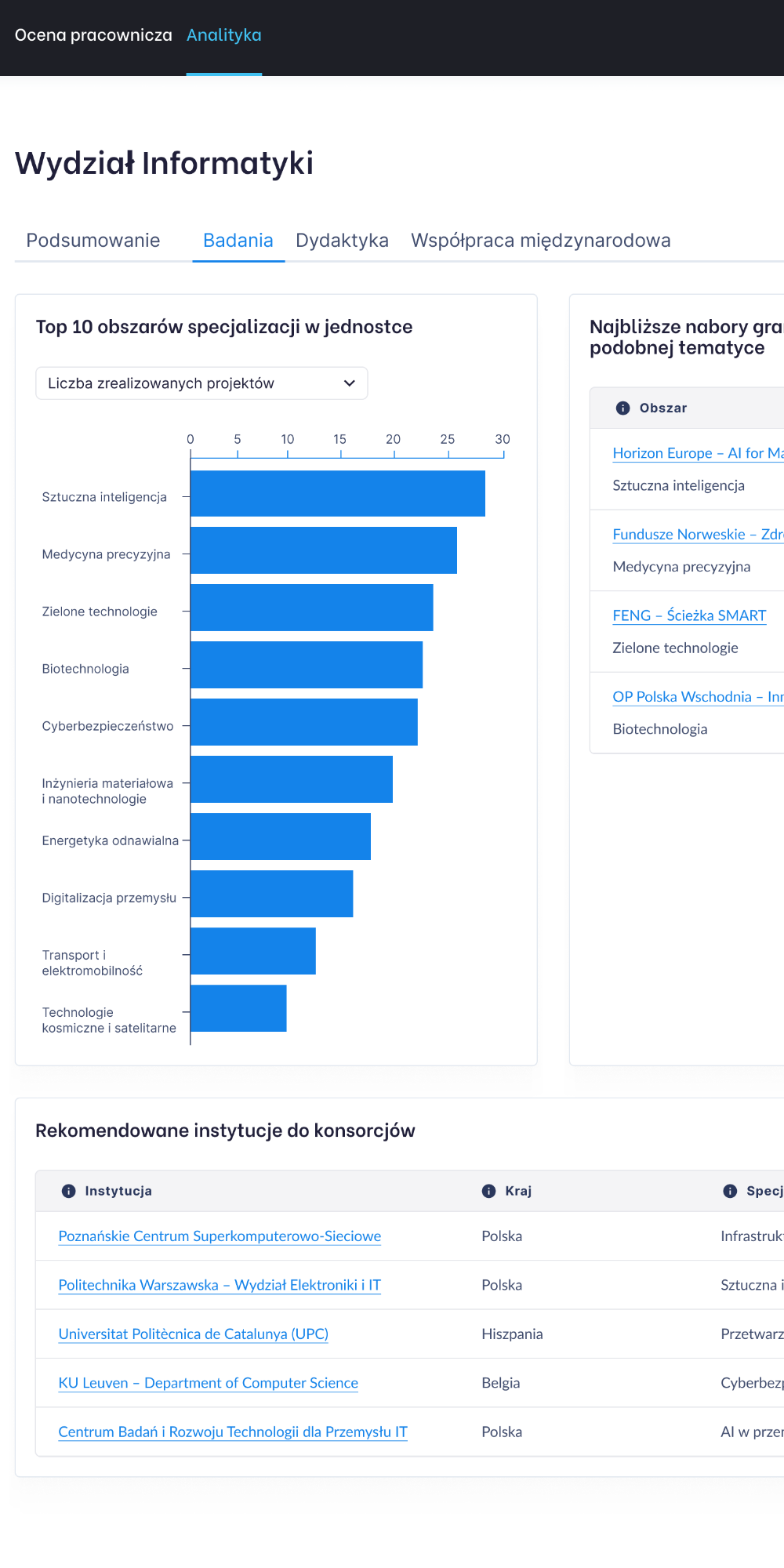
Research analytics view with a ranking of specialization areas and recommended institutions for consortia
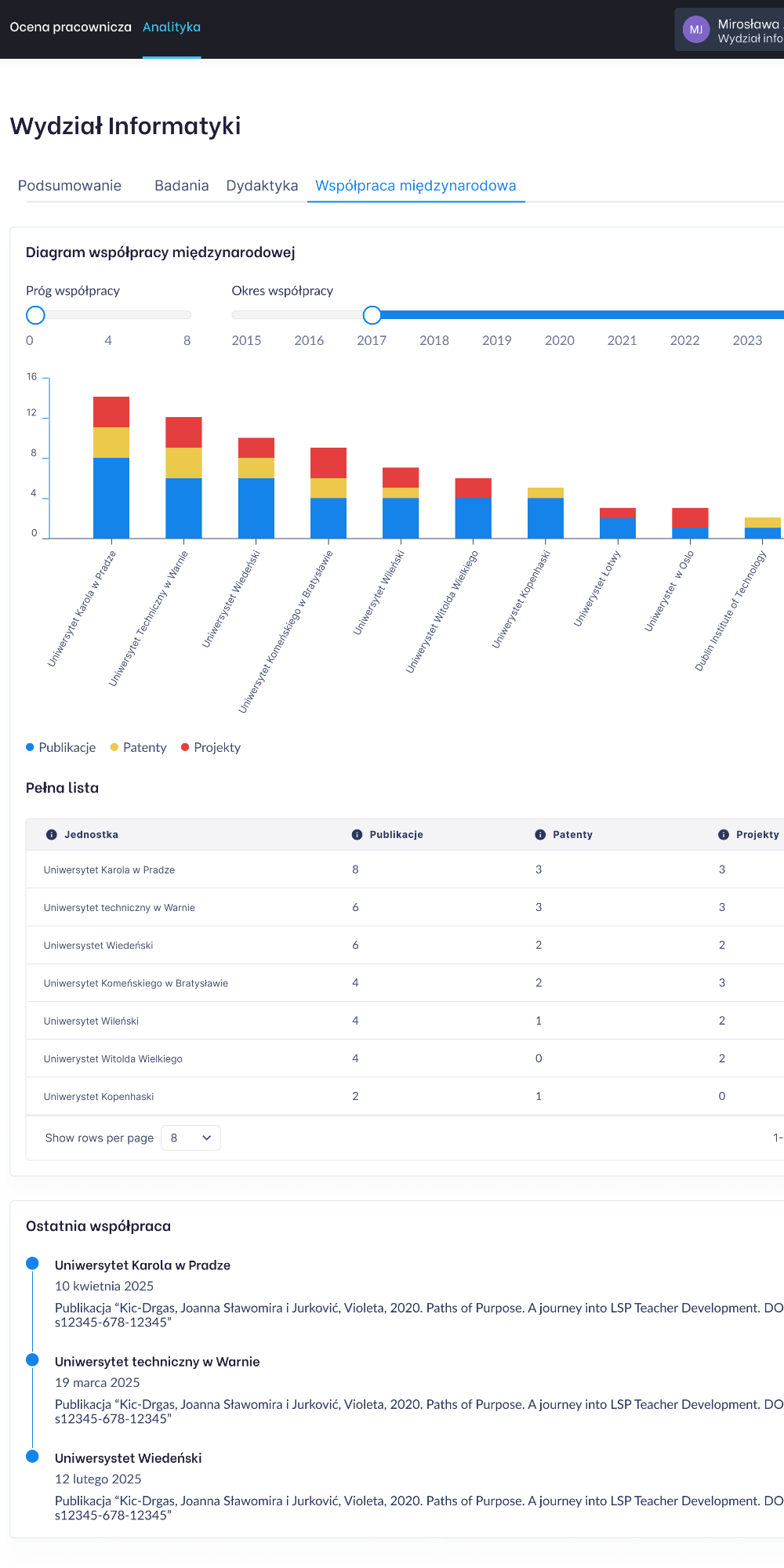
International collaboration panel with activity charts, partner data, and recent collaboration history
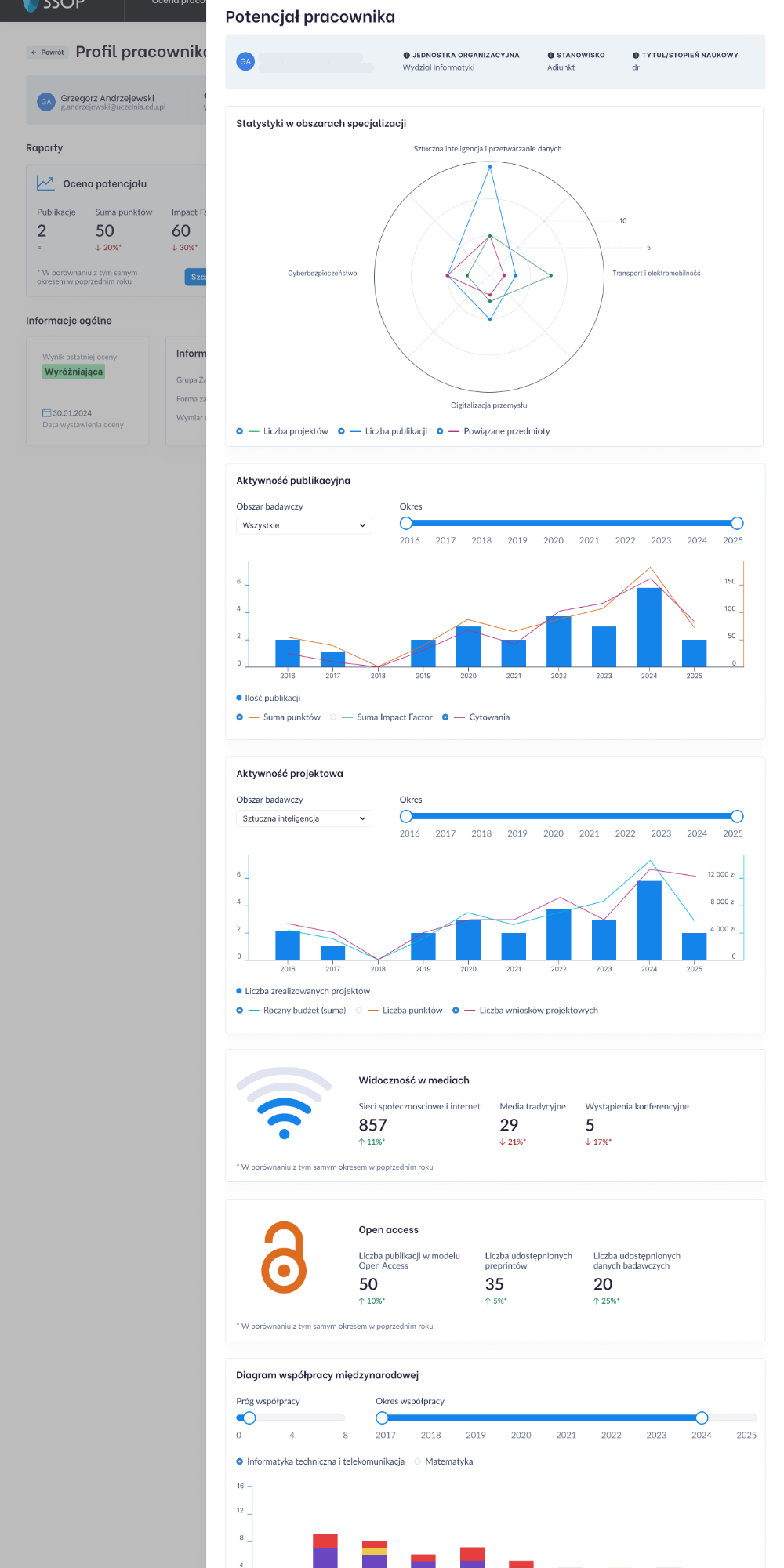
Staff profile with charts for research potential, publication and project activity, and visibility metrics
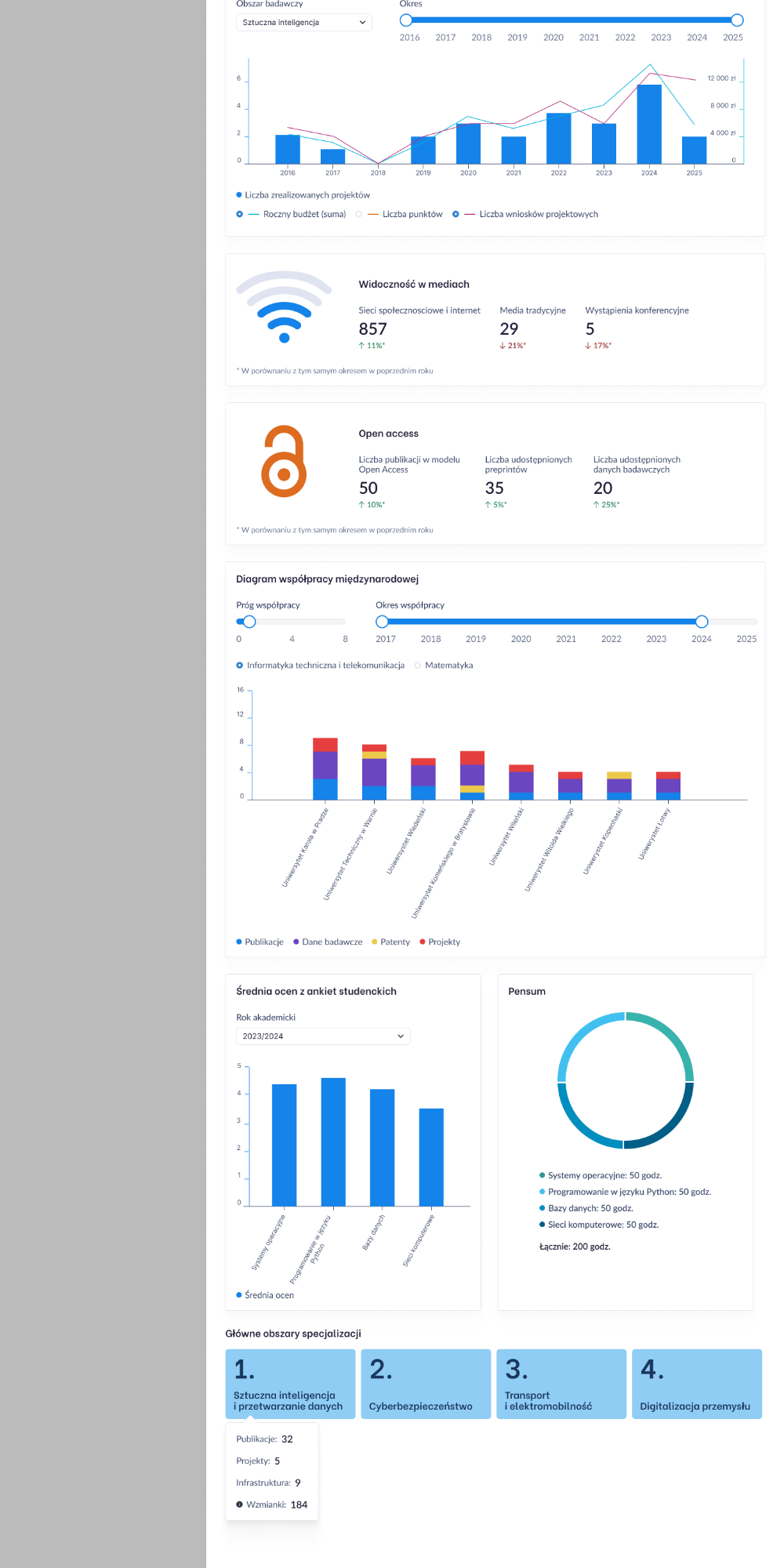
Staff profile with international collaboration analysis, average student ratings, teaching load, and specialization areas
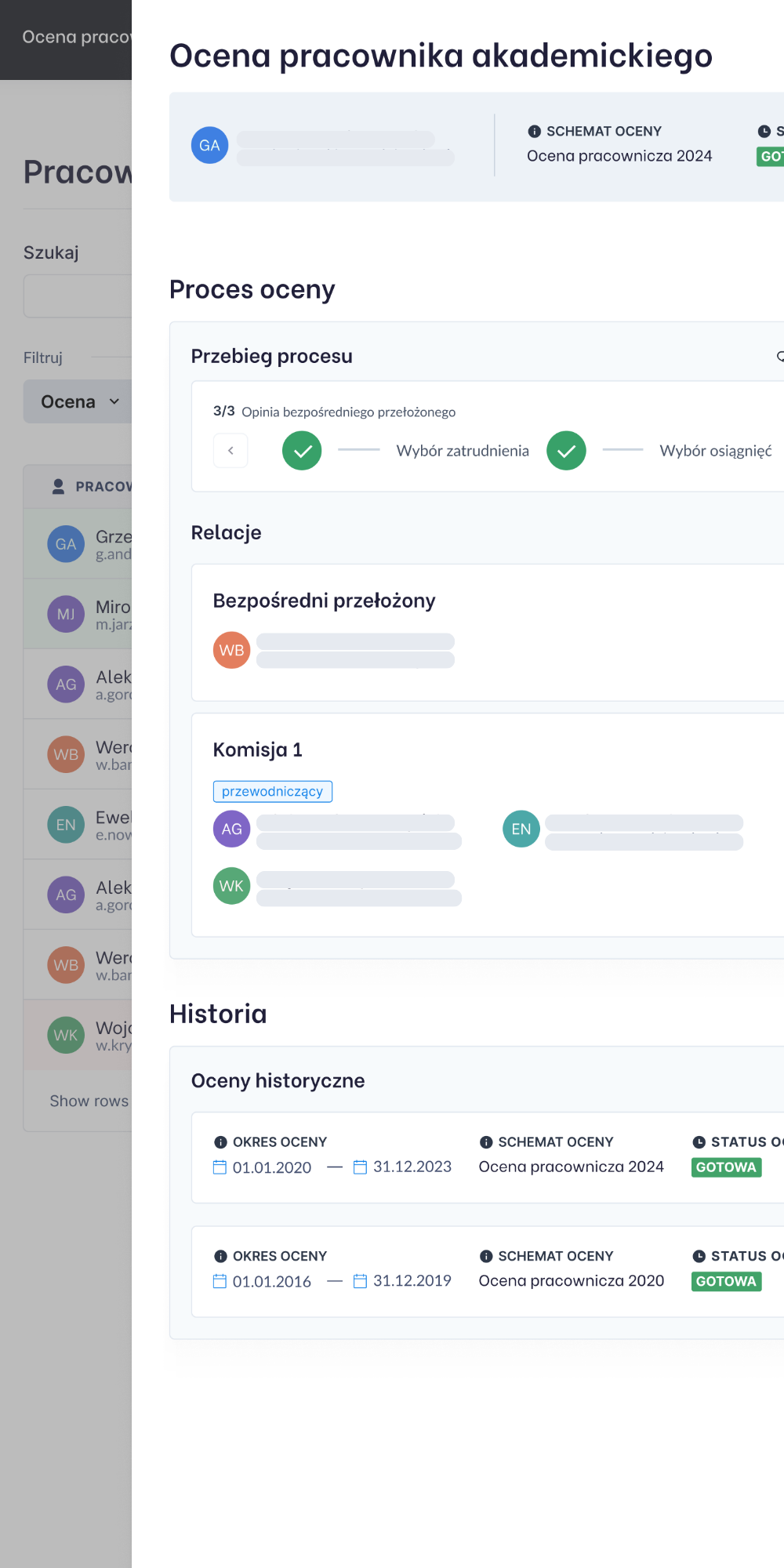
Academic staff evaluation workflow with evaluation stages, reporting lines, committee members, and past evaluations
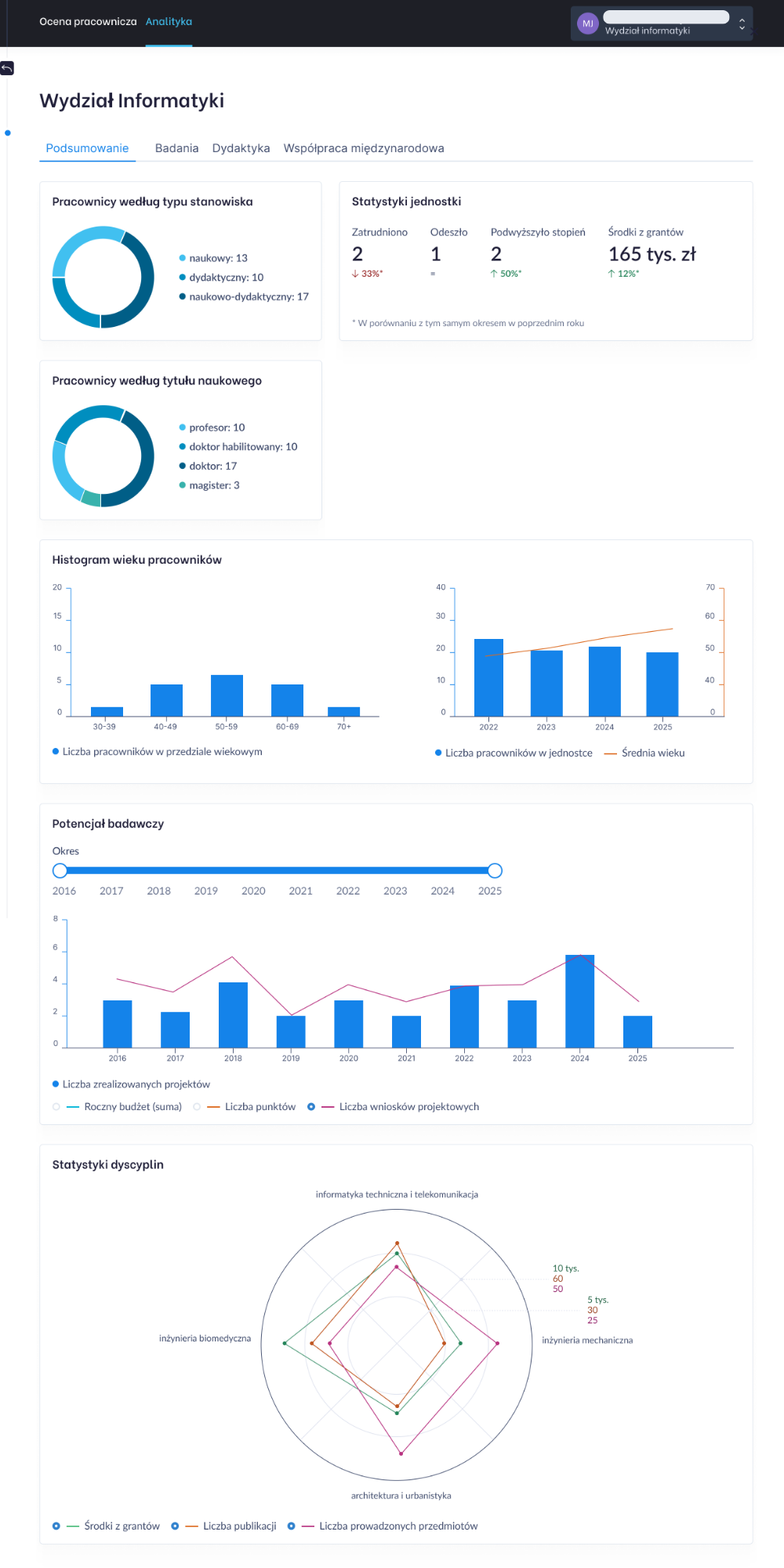
Faculty analytics dashboard with employment structure, staff age, research potential, and discipline statistics
1 / 8
Full integration and zero barriers to data flow

Integration with other university systems

SOP is fully compatible with the university systems most commonly used in higher education. Continuous data exchange between modules eliminates manual data entry and speeds up the entire evaluation process.

  • Knowledge bases

    Import of academic achievements and publication data.

  • Student Information Systems

    Information about courses, classes, and teaching activity.

  • HR systems

    Information about hiring, promotions, and job titles is always up to date.

Illustrations of the SOP interface for academic staff evaluation

Support and development

The SOP module is continuously developed by the Sages team in collaboration with universities and experts in research management and academic staff management. Users receive:

  • regular updates and feature development,

  • post-implementation support and maintenance (SLA),

  • training for administrators and users,

  • the ability to modify and adapt algorithms to changes in university regulations.

Modern technology and data security

The SOP module runs on a web platform and is accessible through any standard web browser.

SOP module – investment in management quality and staff development

The SOP module is more than just an IT tool. It is a strategic component of the university’s development approach, enabling efficient and reliable evaluations, supporting staff motivation, improving the quality of data on research and teaching achievements, and strengthening strategic decision-making. It helps universities focus on what matters most: the development of research, teaching, and the people who make the institution successful.

Let’s talk about implementing SOP

Leave your contact information and we’ll show you how SOP can support academic staff evaluation at your university.

Consents (optional)

The controller of your personal data is Sages sp. z o.o., with its registered office in Warsaw. We process the data you provide in the form for the purposes of performing or concluding a contract, billing, accounting, and financial reporting; complying with other legal obligations; for the purposes specified in the consents; to establish, pursue, and defend claims; and for statistical purposes. You have the right to access your personal data, to have it corrected, deleted, or its processing restricted, to have it transferred, to object to its processing, to file a complaint with the President of the Personal Data Protection Office, and to withdraw your consent. For more information, please visit Privacy Policy .